Practice: living life intentionally
principles i try to live by, a secular spiritual practice
updated 2025-12-31
table of contents
A lot of this is pulled from my time in learning the tradition of insight meditation under the Theravadan Buddhist tradition
I identify as an atheist and a Buddhist
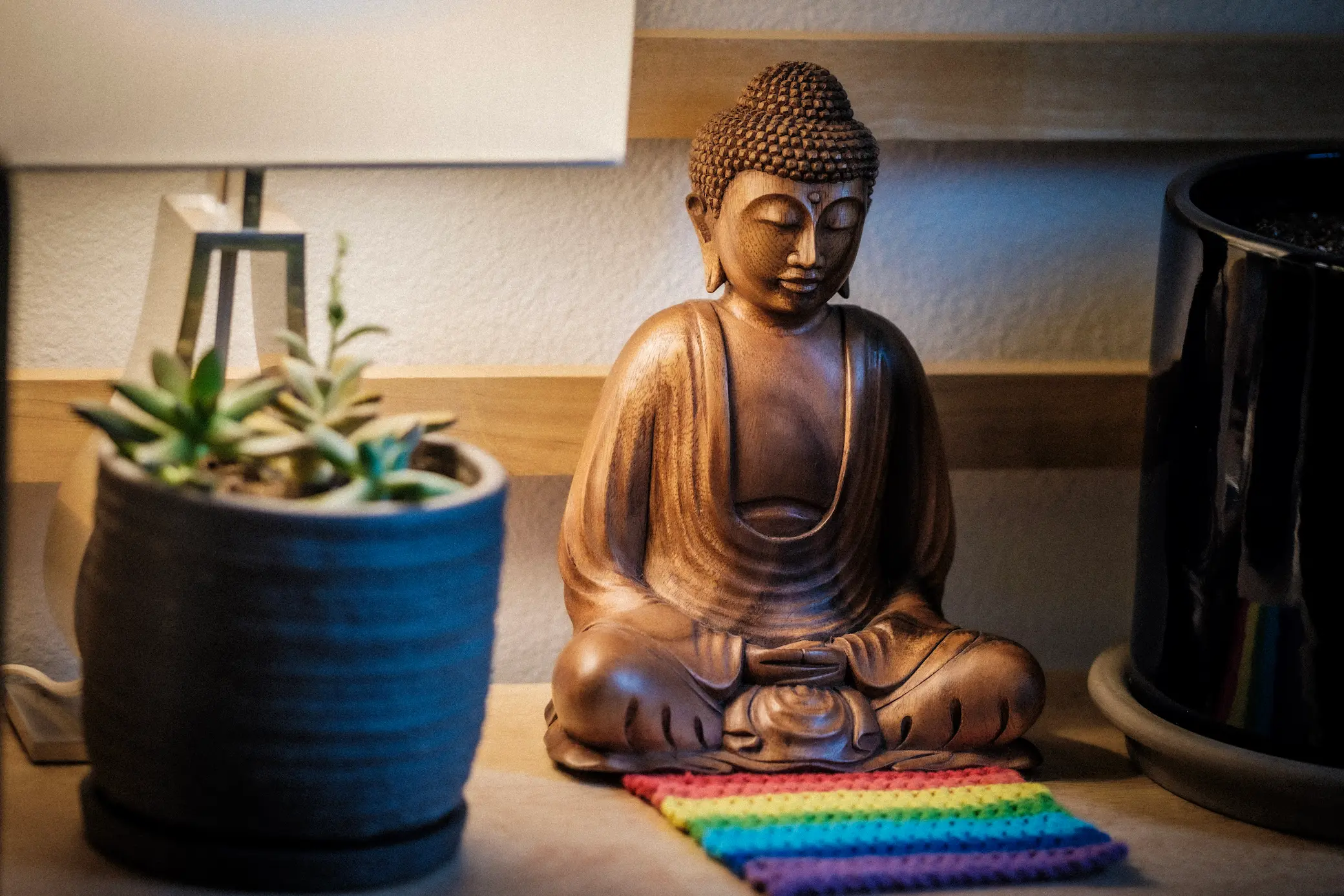
☸️ Buddhism in my own words
To me, Buddhism is a philosophy of life and practice that aims to see things clearly, approaching everything with unbound kindness.
Mindfulness practices strengthen the mind and allow us to have insights about the mind and heart.
Loving-kindness practices cultivate the heart qualities: kindness, joy, compassion, and equanimity (for ourselves and others).
Realizing that the present moment is all there really is—and understanding that we miss a lot of our lives by living in the past or future—allows us to experience life in a fuller way.
When we see our own minds and hearts clearly, we can approach others with increased kindness, compassion, and care.
The project of Buddhism is really simple.
It wishes that all beings everywhere be free of suffering and full of happiness (including ourselves).
Using tools (or as the Buddha called them, path factors) like mindfulness allows us to attempt this wish in the most effective way.
As a matter of experience, all that there is consciousness and what is in it. No self or even free will to be found (thoughts just arise, like a gland secreting).
This is liberating.
We can be free of our own neuroses and gain serenity in this moment.
Nothing to change, inviting all the thoughts, emotions, sights, sounds, and feelings to arise and pass away.
Change is inevitable but we can change how we relate to the things arising in consciousness.
We can fall into our old habits and push them away (or fall into them) or we can be like a mirror and simply let the arisings reflect into consciousness.
Consciousness is innately free, and training in Buddhism allows us to arrive somewhere closer to an awakening. We can be awake in our lives, rather than asleep.
The Buddha was just a guy (not a god) who figured out this stuff and taught it.
“Buddha” is a title and it means “one who is awake” in Pali (the language at the time and place of the Buddha).
Buddhists often speak about “Buddha-nature” or this ability we all have to awaken in our lives and find peace and freedom, living in the moment.
He figured out that desire and aversion are what cause us suffering and there are trainings we can do to help this.
I think he was really onto something: how we can conduct ourselves in a way that’s conducive to reducing harm and increasing well-being, how to have a deep spiritual practice without having to believe in any sort of supernatural claims, how to deepen our understanding of consciousness, and practical advice for life.
And most of all, how to achieve freedom here and now.
Note on faith
“In contrast to perceived Western notions of faith, faith in Buddhism arises from accumulated experience and reasoning. In the Kalama Sutra, the Buddha explicitly argues against simply following authority or tradition, particularly those of religions contemporary to the Buddha’s time.” - https://en.wikipedia.org/wiki/Refuge_in_Buddhism
in addition to the above, I personally do not believe in anything supernatural, believe there is nothing after death, and eschew the word and notion of “faith” as we traditionally understand it
💎 The 3 refuges: these are places to put merited trust in (if we want a path, the refuges help us keep on the path)
- The teacher: I take refuge in the Buddha, as a teacher and a guide to well-being
- The teachings: I take refuge in the Dharma, in the way things are, and in the river of conditionality
- The community: I take refuge in the Sangha, those who are awake, and those who are awakening
⭐ The 5 precepts: these are guidelines for living an intentional life
knowing how deeply our lives intertwine:
- I train myself to care for living beings
- I train myself to share my resources
- I train myself to bring integrity to relationships
- I train myself to speak what is true, kind, and useful
- I train myself to cultivate a healthy mind
📜 The 4 noble-truths: the thesis of buddhism
- Life has suffering in it
- The cause of suffering is craving
- There is a way to end suffering
- The way to end suffering is the noble 8-fold path
🛤️ The 8-fold path: the spokes on our wheel that get us going on the path
(note that in a lot of translations, “wise” is replaced with “right”)
- Wise understanding (or view)
- Wise thought (or intention)
- Wise speech
- Wise action
- Wise livelihood
- Wise effort
- Wise mindfulness
- Wise concentration
Wisdom factors (Pana) is 1& 2
Ethical conduct factors (Sila) 3,4,5
Concentration factors (Samadhi) 6,7,8
🍂 The remembrances: learning to let go
- I am subject to aging; there is no way to avoid aging
- I am subject to ill health; there is no way to avoid illness
- I am going to die; there is no way to avoid death
- Everyone and everything that i love will change, and i will be separated from them
- My only true possessions are my actions, and i cannot escape their consequences
❤️ The Brahma-Viharas: qualities to cultivate in your heart (translated to divine abodes)
- Loving-kindness (metta): May you be happy, may you be healthy, may you be free from suffering, may you be peaceful and at ease.
- Compassion (karuna): May you be free from pain and sorrow, may you be at peace.
- Empathetic Joy (mudita): May you have happiness and the causes of happiness.
- Equanimity (upekkha): May you accept this moment, just as it is.
💓 Example metta meditation
Repeat the phrases out loud or in your head
If it feels right, place a hand on your “heart” or chest
You can silently practice this anywhere and anytime
Usually, one starts with themselves or a beloved (like a pet) and then changes the object to a neutral person then to a harder to love person, then to the whole world
- May
$objectOrPersonsOrSelfbe happy - May
$objectOrPersonsOrSelfbe safe - May
$objectOrPersonsOrSelfbe free from suffering - May
$objectOrPersonsOrSelfbe peaceful and at ease
🫂 Self-compassion practice: cause sometimes we have too much hurt
- Put hand on heart
- This is a moment of suffering (“this is hard”)
- Suffering is part of life (reflect on all those going through the same thing)
- May I hold this suffering with kindness and compassion
💖 Joy practice
May your happiness continue, may it grow.
💔 Compassion practice
- I’m here and I care
- I care about your suffering
- May you be free of suffering
- May your suffering be eased
- I’m with you
- May you find peace
- May you find healing
❤️🩹 forgiveness: an ongoing practice
There are many ways that i have hurt and harmed others, have betrayed or abandoned them, caused them suffering, knowingly and unknowingly, out of pain, fear, anger, and confusion
I ask for their forgiveness
There are many ways that i have hurt and harmed myself
I have betrayed or abandoned myself many times through thought, word, or deed, knowingly and unknowingly
For the ways i have hurt myself through action or inaction, out of fear, pain, and confusion, i now extend a full and heartfelt forgiveness
I forgive myself
There are many ways i have been harmed by others, abused or abandoned, knowingly or unknowingly, in thought, word, or deed
I now remember the many ways others have hurt or harmed me, wounded me, out of fear, pain, confusion, and anger
I have carried this pain in my heart too long
To the extent that i am ready, i offer them forgiveness
To those who have caused me harm, i offer my forgiveness
I forgive you
🧠 mindfulness: how to stay present
- Pay attention to what is arising in consciousness: this includes body sensations, thoughts, emotions, and anything else in consciousness. It helps to have an anchor like the breath: something that you can return to when distractions arise.
- Posture: relaxed, interested, and kind
- You don’t have to finish a thought
- All experience is ephemeral
- You can practice anytime, anywhere
- Mind the valence of things in the mind
- Use the breath as an anchor; breathe and know ur breathing
- Sit and know you’re sitting
- Breathe: note “rising, falling”. Anchor with the breath, sounds, or body sensations
- Take the one seat: many visitors will come and go. Be the knowing, not the things that are known.
- When lost in emotions, fantasy, or hindrance: “It’s alright. Let’s get back to the main event.”
- Perfection isn’t possible. Try your best, and bring your whole self into this process. That’s good enough.
- RAIN: Recognize what is happening; Allow the experience to be there, just as it is; Investigate with interest and care; Nurture with self-compassion.
- Walking: keep attention in transitions.
- Working: wash dishes to just wash dishes, not to get to the next thing
- Remember Chanda vs Tanha (the types of wanting/desire)
🛠️ The 4 Foundations of Mindfulness
- Mindfulness of the body in the body (includes the breath and the four elements: earth, fire, water, air)
- Mindfulness of feeling tones in feeling tones (whether something is pleasant, unpleasant, or neutral)
- Mindfulness of the mind in the mind
- Mindfulness of objects of the mind
💯 The Ten Perfections: qualities we are trying to attain
- Dāna pāramī: generosity, giving of oneself
- Sīla pāramī: virtue, morality, proper conduct
- Nekkhamma pāramī: renunciation
- Paññā pāramī: wisdom, discernment
- Viriya pāramī: energy, diligence, vigour, effort
- Khanti pāramī: patience, tolerance, forbearance, acceptance, endurance
- Sacca pāramī: truthfulness, honesty
- Adhiṭṭhāna pāramī: determination, resolution
- Mettā pāramī: goodwill, friendliness, loving-kindness
- Upekkhā pāramī: equanimity, serenity
🚧 The Five Hindrances: obstacles on the path
- Desire (wanting)
- Aversion (not-wanting)
- Ill-will
- Laziness
- Doubt
☕ The 7 Factors of awakening: being awake on the path
- Mindfulness (sati)
- Investigation of the dharma (dhammavicaya)
- Energy (viriya)
- Rapture (piti)
- Tranquility (passaddhi)
- Concentration (samadhi)
- Equanimity (upekkha)
❤️🔥 Unwholesome and Wholesome States: recognize these when they arise
Greed, Hatred and Delusion
—
Generosity, Kindness, Clarity
✅ The 3 Marks of existence: important philosophical concepts
- Impermanence (anicca)
- Suffering (dukkha)
- No-self (anatta)
🌱 Cultivations: how we can grow
- Dana (generosity)
- Sila (ethics)
- Bhavana (practice)
☮️ Non-violent Communication: a process to use empathy and clarity in our communication
- Observations
- Feelings
- Needs
- Requests
🙏 Prayer for Compassion
“May I be given the appropriate difficulties and sufferings on this journey so that my heart may be truly awakened and that my practice of liberation and universal compassion may be truly fulfilled. May all that arises in my experience—whether I like it or not, whether it’s difficult and challenging, or if it’s pleasant and joyful—may it serve to continue to break my heart open to what is, and to deepen my sense of compassion for myself and for others.”
📝 Retreat Maxims
(from the month-long silent meditation retreat I did in February 2020)
- I shall not fear. Fear is the mindkiller.
- Where meditation is rowing over the sea of samsara, sila is the boat in which you sail. What is yours made of?
- Let your attention be: relaxed, interested, and kind.
- Mindfulness weakens greed, hatred, and delusion. Mindfulness strengthens generosity, kindness, and clarity.
- You don’t have to finish a thought. Drop into the body to arrive at the present moment.
- It is not happiness that makes us grateful, it’s gratefulness that makes us happy.
- Being on retreat is itself an act of generosity to the world.
- The hindrance of doubt has a facet of being indecisive. It’s like digging 100 wells one foot deep instead of digging one well 100 feet deep.
- These teachings are practical and they work.
- The breath and the body is an amazing sanctuary—better than any we have ever built. You have 99 problems but the breath ain’t one. Take refuge in the breath.
- If it’s skillful—and you have enough baseline concentration—instead of dropping thoughts emotions, and mind-states like they’re hot: be with the phenomena, briefly, to start to understand your patterns.
- These techniques are wonderful in that they can provide immediate well-being to the practitioner.
- First, do no harm; surrender to the way that it is. Breathe, just breathe. And now it’s like this. This brings serenity. Second, open your heart to loving-kindness to realize wholesome intentions. Finally, respond with embodied action. This brings wisdom.
- Everything rests on the tip of one’s motivation.
- All experience is ephemeral. This too shall pass.
- Retreat experience is like a seed and the fruit of that experience can ripen over years. A month-long retreat will put mindfulness into you that won’t evaporate.
- Every single moment is an opportunity for practice. What are you aware of now?
- Turning toward the experience—whatever it is—uproots greed, hatred, and delusion while admitting peace. This practice requires a courageous and open heart.
- Actions of the body, speech, and mind should only be done upon reflecting: does this harm myself, others, or both or is unskillful?
- When on retreat, we are doing all the work the books are talking about.
- Remember, you may not solve all (or any) of your problems, or answer any deep questions on this retreat, though we all hope for some useful insights. Simply be on alert for whatever arises.
- It is always now. Bask in the now, in this loving-awareness, appreciating whatever arises. Then you will be free.
- Really commit to watching the valence of your experience. It’s where all the drama comes from. It’s one of the most important keys to waking up.
- Be here now! Every moment is worth your kind attention.
- Who sees these sights? Who hears these sounds? Who feels these sensations? Who thinks these thoughts? Or is there just seeing; just hearing; just feeling; just thinking? No “one”. Just the streaming of consciousness.
- In meditation, you’re not trying to make your experience the way you want, you’re trying to accept or allow your experience the way that it is in each moment.
- Struggling is extra. Don’t struggle with the struggle. Balance your effort to hold it with loving-awareness.
- Be simple and easy. Sit and know you’re sitting. Breathe and the let the breath be known. Be like a mirror, never changed by what it reflects.
- There’s often a seductive quality to thoughts—even unpleasant ones. Within meditation, there’s nothing worth thinking about. Our goal in meditation is to observe thoughts as they arise, take shape, and pass away.
- Do not fret over things you have no control. Show up for the uncontrollable with embodiment and kindness which results in love. Never forget, love is the best thing we do.
- Thoughts can waste our energy. A lot of thought is just noise. Think of thought like a garnish or a great first officer. Loving-awareness is the main dish and the captain of the ship.
- We often get in our own way. It’s best to just let go.
- Just relax and enjoy the show, it’s the show. The only channel, this streaming consciousness and present time awareness.
- Don’t rush. You’ll only be rushing toward your grave.
- Be in the moment. This is it. The only thing you’ll ever get.
- Just keep showing up.
- The fall didn’t happen. There’s no sin nature. Only confusion and ignorance. This practice teaches us to see more clearly.
- Our minds are laboratories. Discover the basic principles of being human by studying them.
- Look for what’s looking.
- Never let the mind desert the body.
- We’re often thinking without knowing that we’re thinking. Know the thinking by paying close attention.
⚛️ Meaning
life has no inherent meaning
we create it
13.8 billion years of uncaring and unguided events have led to where we are today; we are socially conditioned primates that evolved to live in groups; we have kindness installed by default
the universe–in it’s majesty, and it’s scope–was not created for us and will continue long after humanity goes extinct
we are so small
let us know that one day the universe will end; let it liberate us from our anxieties and insecurities; let it guide us to be kind, silly, and happy in this moment with people we love for this is all we have: right now
💪 Health
(see also “fitness” and “kitchen” pages)
- sleep is the pillar of health, get a good amount every night
- exercise is helpful for many things, including mental health: do some everyday
- eat simple, whole plant-based foods
- alcohol is poison, there is no safe amount
- coffee is good for ya
- DRINK WATER
- be silly and play!
⚠️ Boundaries
from Nedra Glover Tawwab in “Set Boundaries, Find Peace: A Guide to Reclaiming Yourself”
“there is no such thing as guilt-free boundary setting. If you want to minimize (not eliminate) guilt, change the way you think about the process. Stop thinking about boundaries as mean or wrong; start to believe that they’re a nonnegotiable part of healthy relationships, as well as a self-care and wellness practice.”
“People can’t meet a standard that we never express. Boundaries are not unspoken rules.”
“boundaries are not walls. A wall keeps people out, while boundaries show people how to exist in a relationship with you.”
“Boundaries to Consider: I say no to things I don’t like. I say no to things that don’t contribute to my growth. I say no to things that rob me of valuable time. I spend time around healthy people. I reduce my interactions with people who drain my energy. I protect my energy against people who threaten my sanity. I practice positive self-talk. I allow myself to feel and not judge my feelings. I forgive myself when I make a mistake. I actively cultivate the best version of myself. I turn off my phone when appropriate. I sleep when I’m tired. I mind my business. I make tough decisions because they’re healthy for me. I create space for activities that bring me joy. I say yes to activities that interest me despite my anxiety about trying them. I experience things alone instead of waiting for the “right” people to join me.”
from Melissa Urban in “The Book of Boundaries: Set the Limits That Will Set You Free”
“It’s not your job to guess my boundaries, it’s up to me to set and hold them.”
“A boundary isn’t about controlling someone else or telling them what to do. Boundaries are a limit around what you will or will not do in order to keep yourself safe and healthy.”
“Self-boundaries are a gift from Present You to Future You, and if that gift isn’t what Future You needs, exchange it for something better.”
“people don’t need to understand your boundary in order to respect it.”
boundaries are clear and kind
🤝 Solidarity
this is the feeling and action that says: i will be with you; even if we disagree on some things, we are in this together
“Gondor calls for aid!”
🌍 Community
building community is paramount to fighting injustice, cultivating joy, putting love out into the world, and feeling connected to something greater than ourselves
😆 Silliness
be silly, cheesy, playful, uniquely u
silliness is what we need more of
i silly =D
💞 Relationship-anarchy
“Relationship anarchy questions the idea that love is a limited resource that can only be real if restricted to a couple. You have capacity to love more than one person, and one relationship and the love felt for that person does not diminish love felt for another. Don’t rank and compare people and relationships — cherish the individual and your connection to them. One person in your life does not need to be named primary for the relationship to be real. Each relationship is independent, and a relationship between autonomous individuals.”
whether they are LTRs, LDRs, FWBs, hookups, short-term dating, long-term dating, or anything in-between: consenting individuals can interact in ways that honor their values; removes the stigma of sex, sexuality, and gender-expression; and tears down the oppressive nature of traditional relationship structures
❓ Questions
“in the end these things matter most:
- how well did you love?
- how fully did you live?
- how deeply did you let go?” - Jack Kornfield
🌃 Nightly
- what inspired you today?
- what challenged you today?
- what surprised you today?
- what did you learn about love today?
Gatha on Impermanence
The day is now ended.
Our lives are shorter.
Let us look carefully.
What have we done?
Noble Sangha, with all of our heart,
Let us be diligent
Engaging in the practice.
Let us live deeply,
Free from our afflictions,
Aware of impermanence
So that life does not
Drift away without meaning.
🏁 Closing principles
- bodily autonomy is non-negotiable! our rights to abortion and transition are non-negotiable!
- let’s be prepared and create safe, welcoming communities
- seek training in martial arts
- a fascist worked out today. did u?
- capitalism is a fuck and it and colonialism are big reasons why the world is a fucking mess
- fuck cars, build transit
- this moment will not happen again
- “time is an onslaught, love is a mission”
- “hold your own”
- nostalgia is fascist-like. don’t succumb to believing it.
- “It’s got to come from the heart if you want it to work” -from “Come From The Heart” by Kathy Mattea
- Go and make some mistakes, you live and you learn | And where the chips fall, it’s not your concern, nah | Like the wind gonna breeze, the fires’ll burn | Just let the gears, my friend | Oh, just let the gears, my friend | Let ’em turn" -from “Spin The Wheel” a song from “Arcane”
- “you can do anything”